
A true story from Diani Beach — and a warning every traveller needs to read before they land.
She did everything right. It still went wrong.

She researched. She read reviews. She booked through a verified platform. She still didn't make it to her accommodation until 10 pm, eight hours after she arrived in the country.
She arrived at Mombasa's SGR terminus at 2 pm on a Friday. Young, solo, excited, her backpack heavy with plans. A confirmed reservation at Vszameitat Beach Homes on Kenya's South Coast was waiting for her.
What she hadn't booked was the transfer.
The sixty kilometres of coastal road between the station and her front door is where everything fell apart.
The offer that seemed too good to refuse.
We will call our guest H.
She is in her late teens, Asian, living in Nairobi, Kenya, and travelling solo. She has just stepped into the organised chaos of a busy Kenyan train terminus for the first time. Before she can orient herself, a driver — let's call her K — approaches. Warm smile. Professional yellow vest. K immediately asks H where she is going.
H shows her phone's rideshare app, with the destination already entered. The rideshare app says KES 4,200. K says she will do it for KES 3,000, but H would need to cancel the app booking and pay cash directly. She claims that the rideshare app takes too much commission.
H agrees. She cancels the app booking. She gets in the car.
The detour that was never on the itinerary.

It is 3 pm. K suggests going to Wasini for a dolphin tour. She says: 'You cannot come to Diani and miss out on swimming with the dolphins. It is barely out of the way. It will only take an hour.'
What K does not say is that dolphin tours at Wasini run in the morning. By afternoon, the water is empty. H will see nothing. But K knows this. She also knows that H does not.
H is taken out on a boat for forty-five minutes.
She sees no dolphins. When she returns to shore and refuses to pay, the boat operators and K close in around her. The KES 3,000 she paid at the terminus, K now explains, was transport to Wasini only — not the return journey. The experience itself costs KES 4,500 extra.
H pays. She has no real choice. She is far from her destination, surrounded by people she does not know, in a country she is a foreigner in.
Every step of the journey has been designed to extract money from H. She is not a passenger being helped. She is a target being moved through a system.
The guesthouse with bats flying out the door.
Back in the car, K does not drive toward Vszameitat Homes — the property H booked. She drives to a B&B where she earns a commission for delivering guests. She presents it with confidence, as though this is the natural next step.
When H protests and shows her confirmed booking on Booking.com, K waves it away. That place is far, she says. This one is just as good. Maybe better.
K opens the B&B door. Bats fly out.
H refuses. Firmly, finally, completely. She holds her phone up with the booking confirmation visible and points at the road ahead. K, calculating silently, gets back in the car.
It is evening now.
H is watching Google Maps carefully. She sees the blue navigation pin — and then watches the car drive straight past it. K explains that the road on that side is dangerous. That she knows a better route.
That H should trust her.
H's calls our team at Wirbelwind, and sends her live pin, we start tracking it.
We watch as they pass the property and keep moving.
Our team member tells H exactly what is happening. They stay on the line, guiding her turn by turn, as she tells K in a voice that leaves no room for argument: turn the car around. Now.
K turns around.
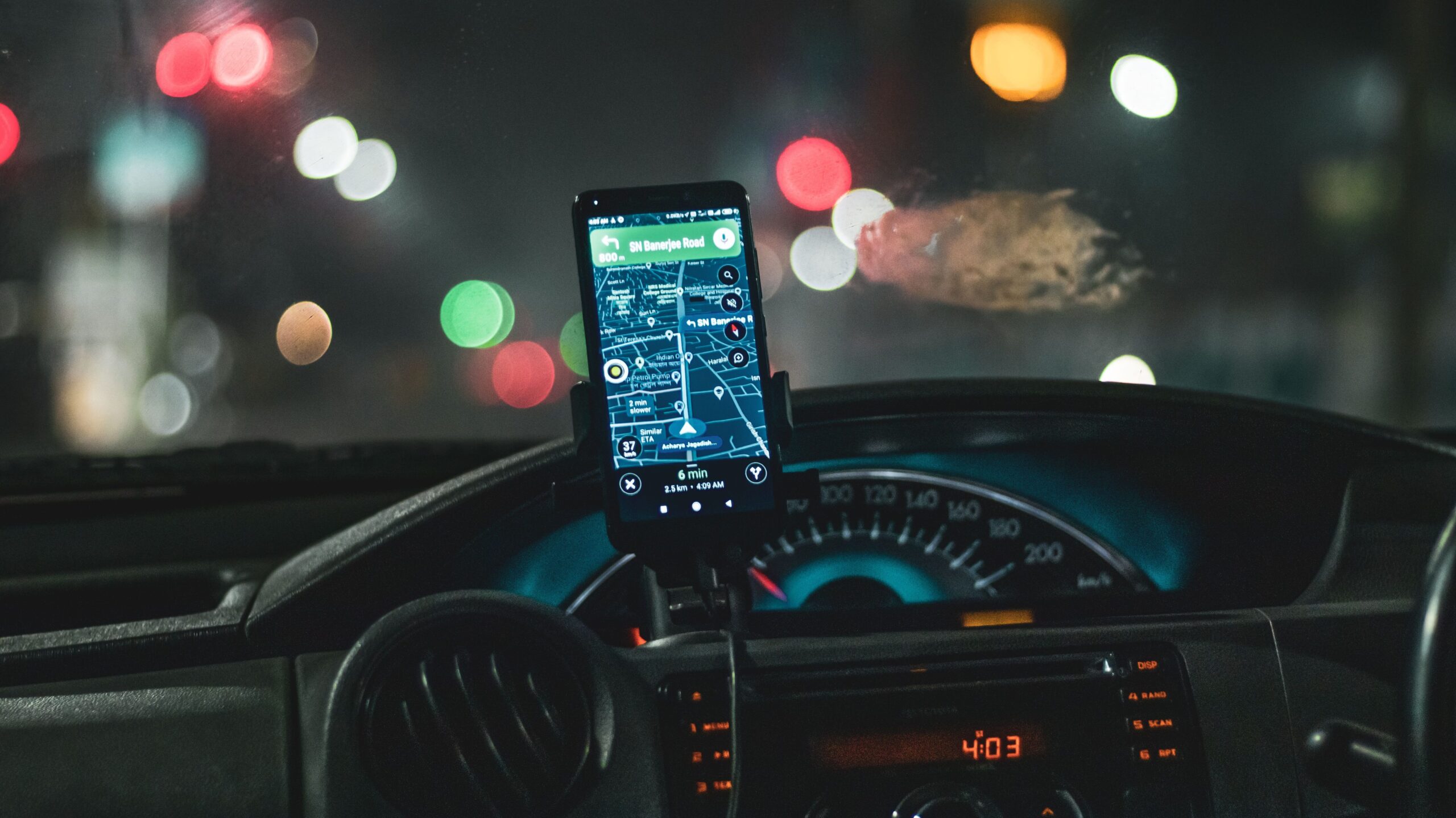
They arrive at Vszameitat Homes at 10 pm. Eight hours after H stepped off the train. K gets out of the car and blocks the gate.
The agreed price of KES 3,000 has become KES 8,500.
When H refuses, K grabs her. Our staff hear the noise from inside the compound and come out. One staff member positions himself between H and K.
Another wraps her arms around H and holds her.
Through tears, hands shaking, H transfers the money on her phone. The moment the transfer completes, K checks her screen, gets in the car, and drives away fast. She does not wait to be questioned. She already knows why.
By the time we held her, she was not just crying. She was shaking. She kept saying: I've been scammed. They hit me. I didn't know. I just needed a ride.

H's experience is not a freak incident. It is a well-crafted system that preys specifically on foreign visitors.
Preying on people who are new to the country, unfamiliar with local pricing, travelling alone, and conditioned to trust anyone who seems helpful.
In the Kenyan coastal hospitality industry, most drivers earn commission not just on transport but on every guesthouse, tour, and experience they deliver a guest to. The incentive is not to take you where you want to go. The incentive is to take you where they get paid.
This manifests in predictable patterns:
- Drivers who suggest you cancel the app and pay cash — removing your consumer protection in one step.
- Unsolicited detours to tours or experiences that benefit the driver financially, presented as unmissable local gems.
- Deliberate navigation errors designed to make your actual destination seem far, dangerous, or difficult to reach.
- Drop-offs at unlisted accommodation where the driver earns a commission, regardless of your confirmed booking elsewhere.
- Price hikes at the final destination, when you are tired, far from help, and surrounded by unfamiliar people.
H experienced every single one of these in a single journey.
How to protect yourself.
Before you travel to Diani or anywhere along Kenya's coast, read this and remember it:
- Book your transfer in advance through your accommodation or a verified operator.
- Never cancel a rideshare app booking to pay cash, regardless of how much you are told you will save. The app is your record, your accountability, and your safety net.
- If a driver suggests a detour, however genuine it is presented, politely decline. You can always book an experience separately through your host. You cannot undo eight hours in the wrong hands.
- Share your live location with someone you trust for the entire duration of any journey.
- If something feels wrong mid-journey, call your accommodation directly. A legitimate host will guide you in, talk you through it, and stay on the line.
At Wirbelwind Marketing, we manage a portfolio of holiday homes on Kenya's South Coast.
When you book with us, whether through our website, Booking.com, Airbnb, or any other channel, your transfer and your experiences are not left to chance.
We organise transfers through drivers we know personally, have worked with over time, and trust with our guests. We organise experiences, snorkelling, dolphin tours, dhow trips, and forest walks, through providers we have vetted and visited ourselves.
We do this because H's story should not be anyone's first memory of Diani.
Before you land, talk to us.
Every guest who books with Wirbelwind gets something H didn't have: a driver we know by name, a number to call when something feels wrong, and a team that will stay on the line until you're safe inside the gate.
To arrange your transfer from Mombasa SGR, Ukunda Airstrip, or Moi International Airport, call us at +254 746 597 384 or email us at info@wirbelwind-marketing.de
If you know someone planning a trip to Diani, send them this. It might save them from a scamming experience.
This is based on a guest story. Names and identifying details have been changed. The events described are real.